
Billet receiving and inspection
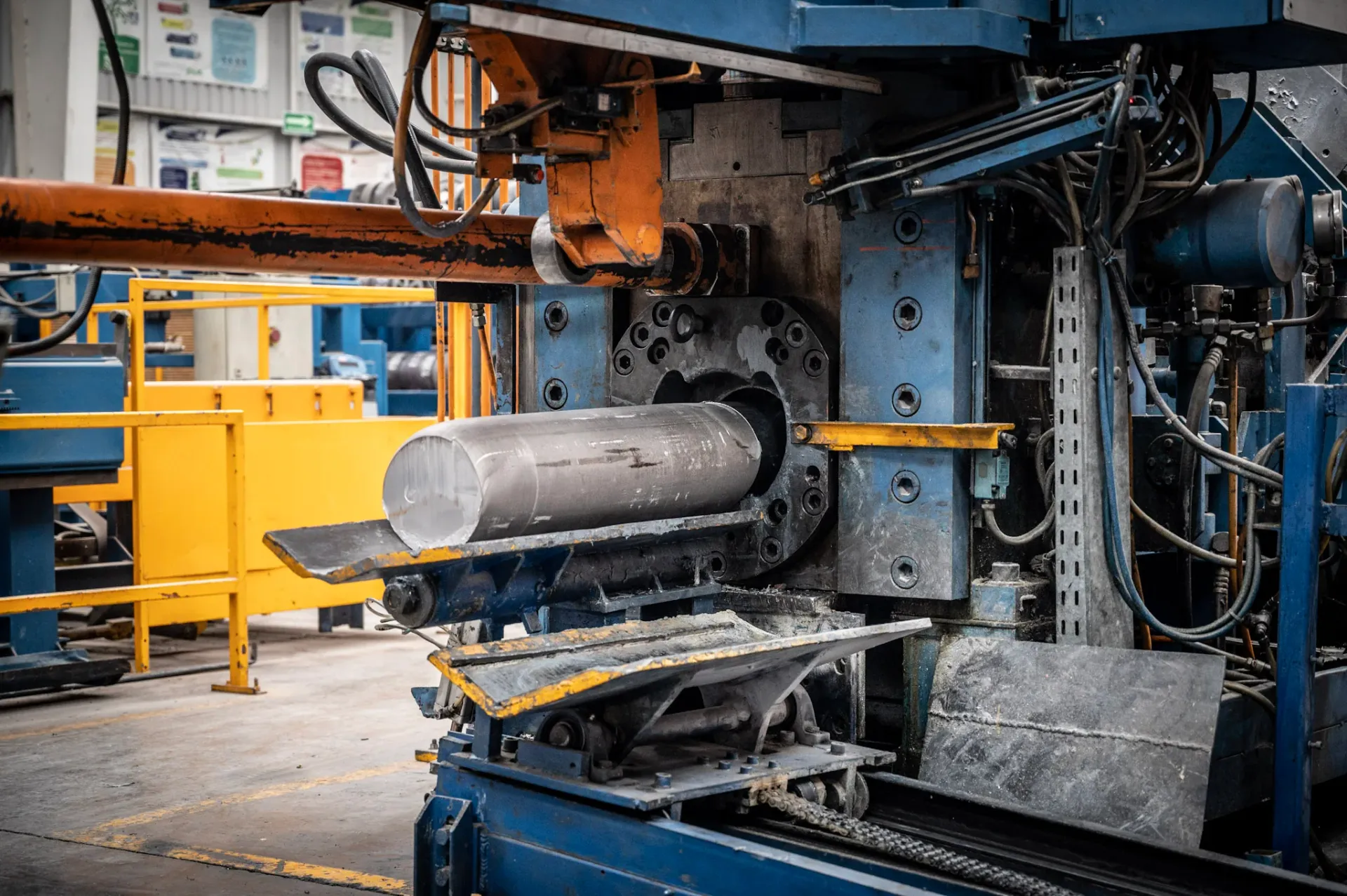
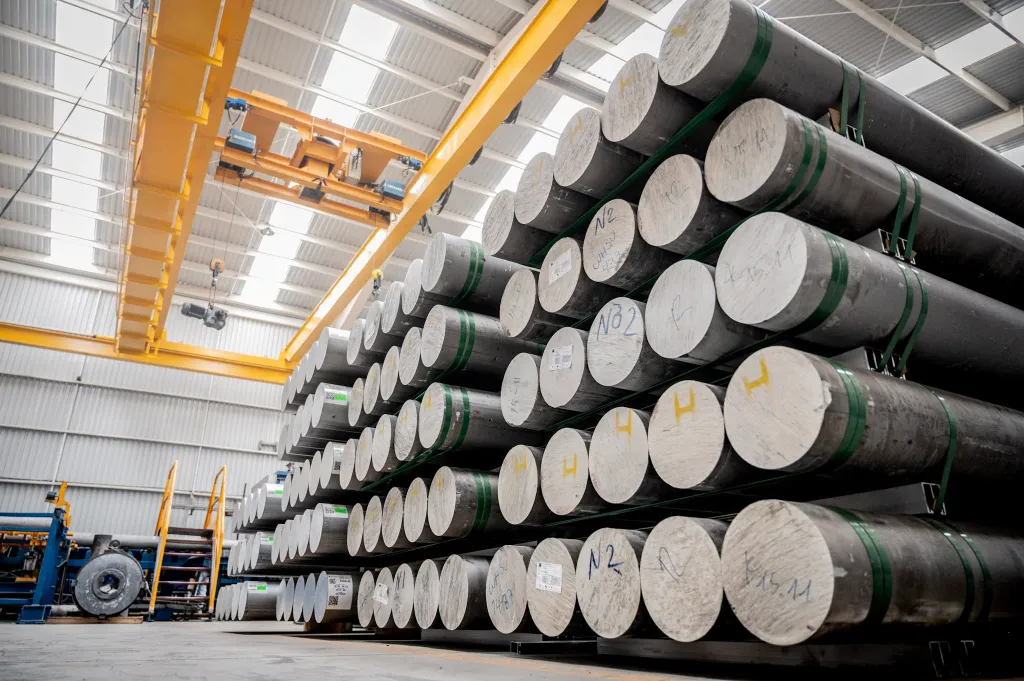
Raw material arrives on flatbed trailers, is unloaded with an overhead crane, and is placed in the storage area. The chemical composition certificate for the requested alloy is reviewed before release.
Received alloys: 6063, 6005, and 6061 · Diameters: 6, 7, and 8 inches
Heating
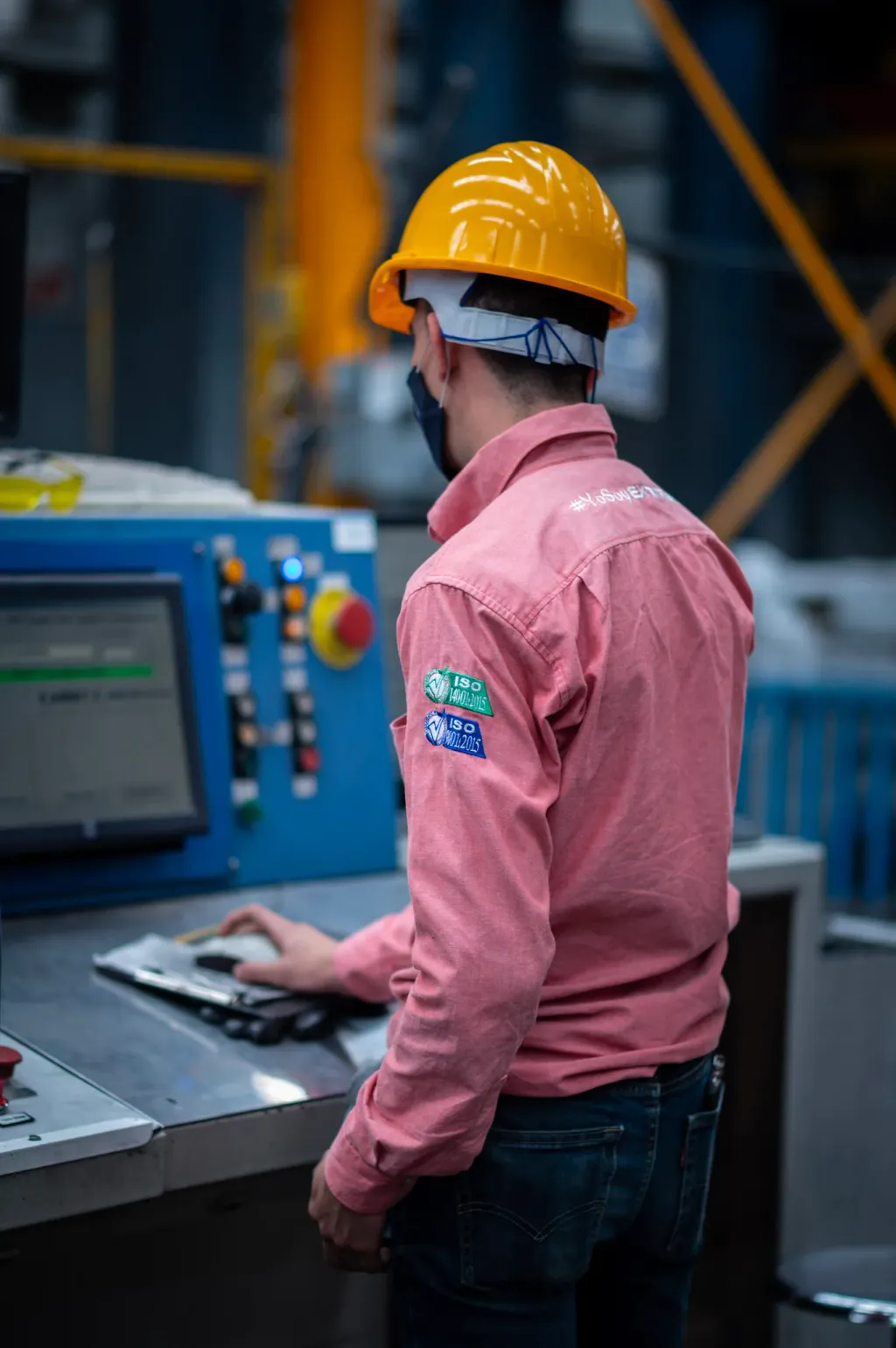
The billet moves on rollers into a furnace with three heating zones. Once it reaches working temperature, it is cut to a suitable length for feeding the press.
Three heating zones · Roller movement · PLC-controlled hydraulics
Press extrusion
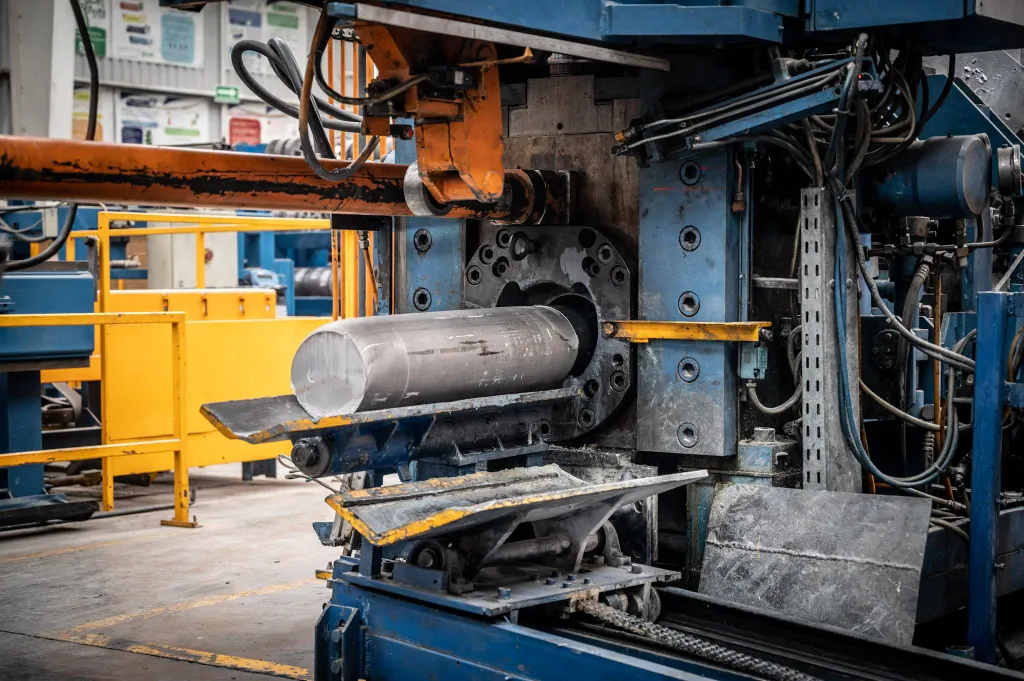
Loaders raise the billet into the container. The ram pushes it through the die, and aluminum flows through the cavities to form a continuous profile with the requested cross-section.
2,200-ton Presezzi press · Billet up to 8 inches
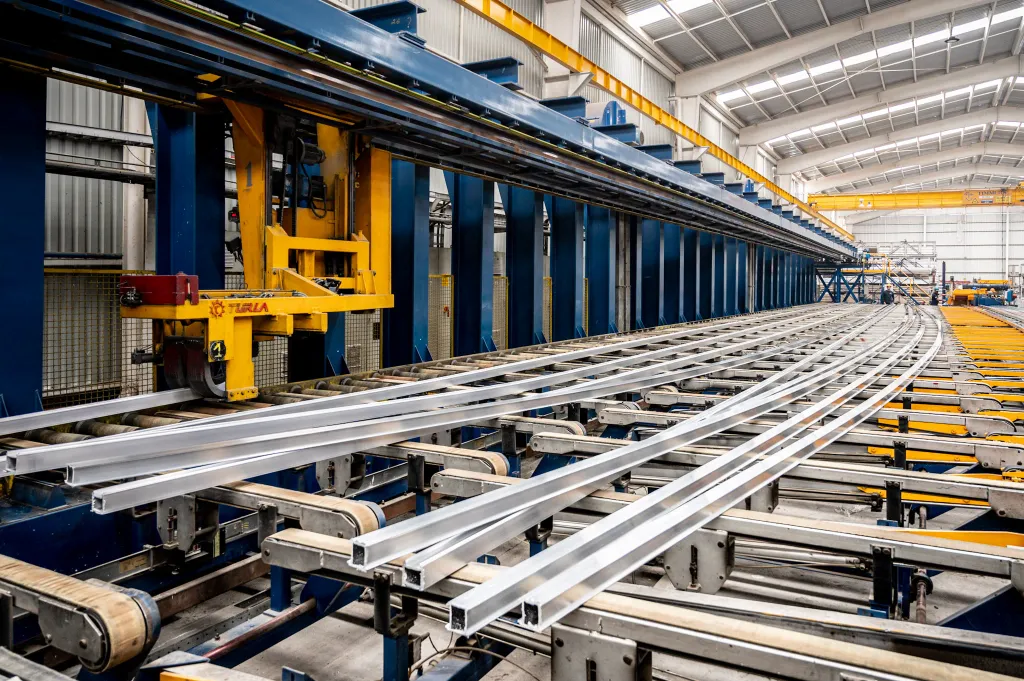
Heat treatment
Temper defines the balance between strength and ductility. T4 combines solution treatment and rapid cooling with natural aging for bending and forming; T5 uses press-exit cooling followed by artificial aging for medium-high strength and dimensional stability; T6 combines solution treatment, intensive cooling, and artificial aging for maximum strength with lower ductility.
T4: forming and bending · T5: architecture and light structures · T6: high-load structures
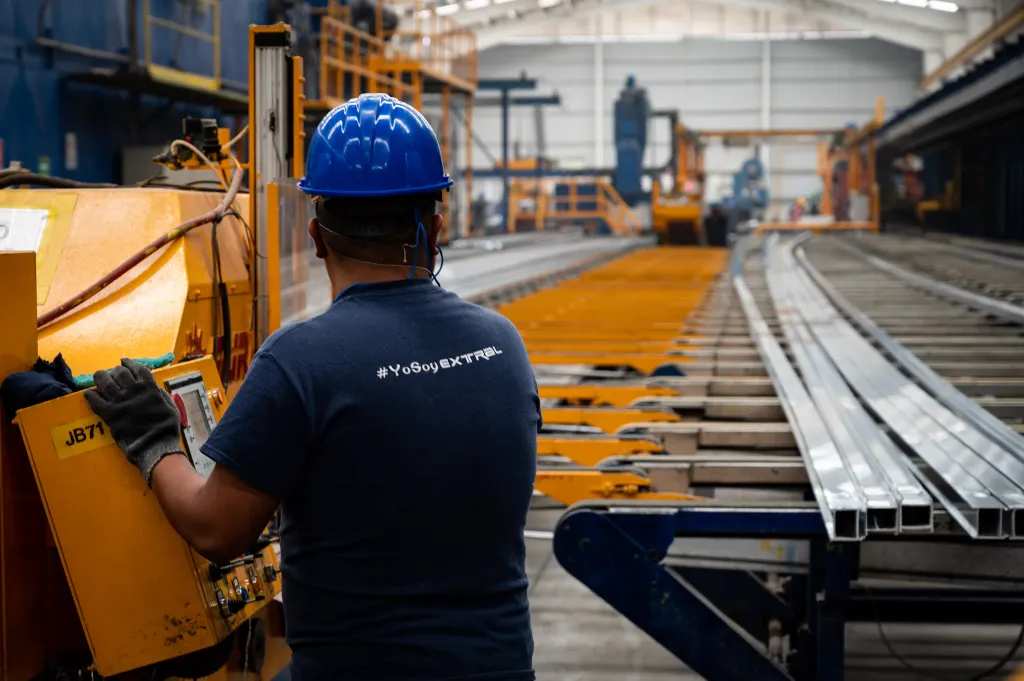
Stretching
Once cool, the profile is stretched in a controlled manner to improve straightness and relieve stresses generated during extrusion and cooling.
Reported stretch: 0.2–1.2% of the initial length
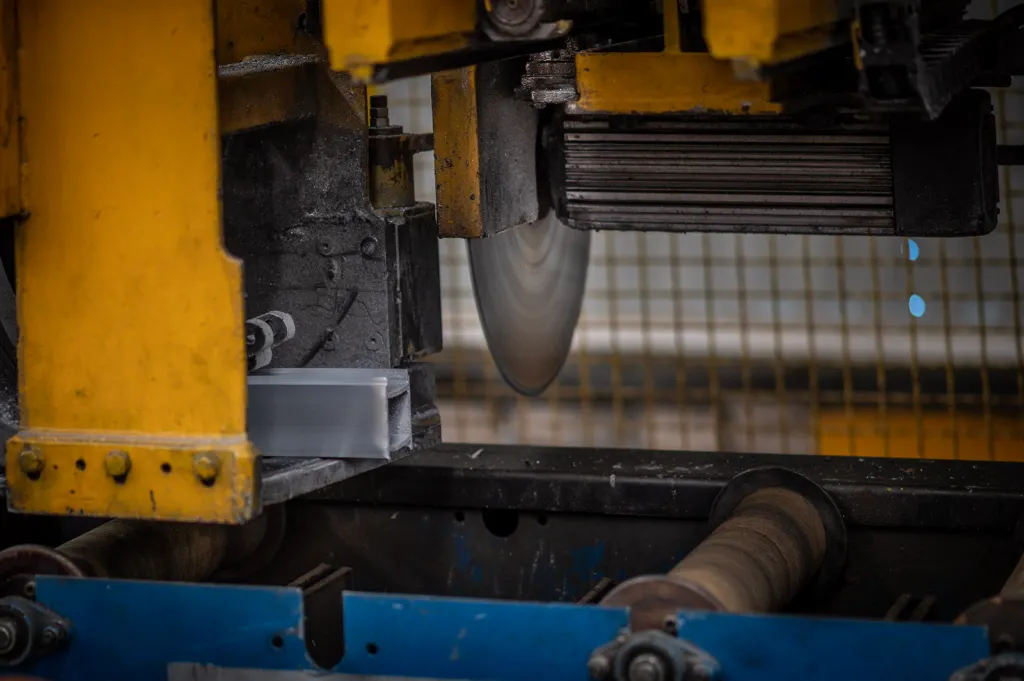
Cutting to length
Profiles are cut to the requested size. They are then placed in baskets with separators to prevent direct contact between pieces.
Automatic-cycle TURLA saw · Reported maximum length: 15.95 m
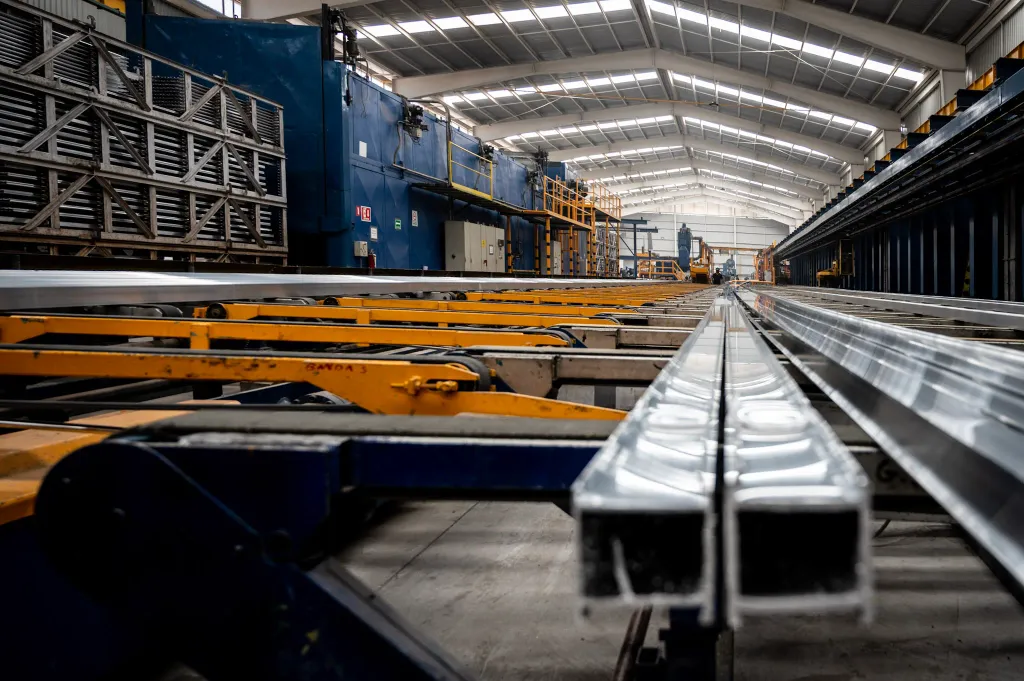
Heat-treatment furnace
Full baskets enter the furnace for the aging cycle required by the specified temper, developing the mechanical properties defined for the project.
Two-zone furnace · Roller movement · Up to eight baskets per zone
Machining
When required, profiles proceed to precision cutting, drilling, slotting, or roughing to achieve the requested dimensions and features.
Precision cutting · Router · Machining center
Finishing
We can deliver finished products with anodized or painted finishes according to the project’s aesthetic and functional specifications.
Anodizing · Painting · Finished product
Packing and shipping
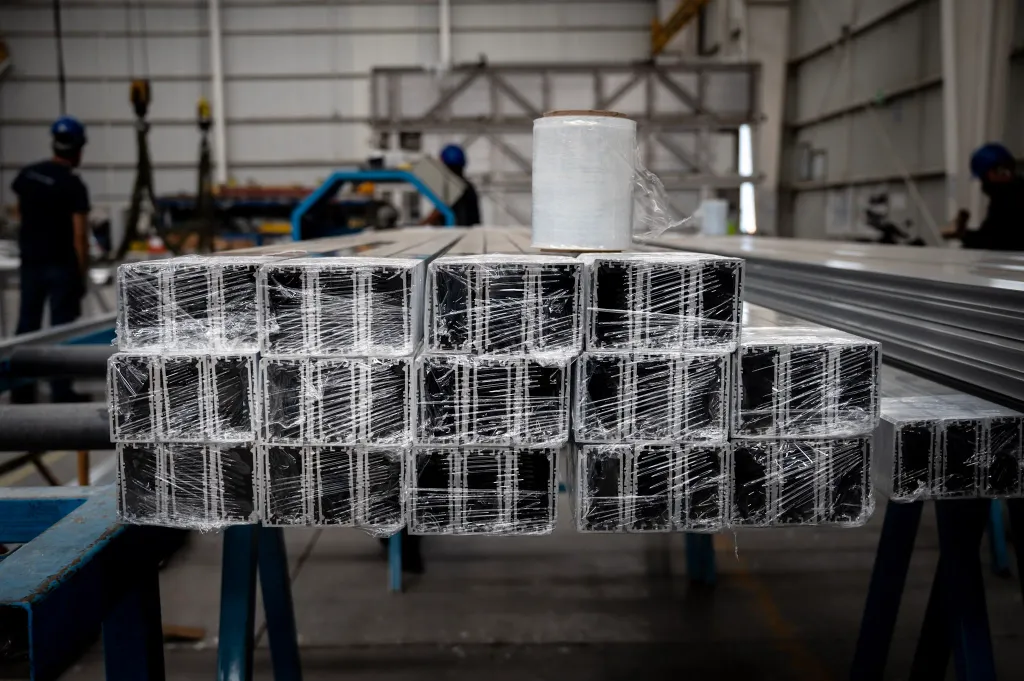
Profiles are grouped and protected according to customer instructions. Once prepared, they are loaded for delivery.
Grouping · Protection · Project-specific packing · Shipping